Lubok Antu Air Quality Worst in Sarawak at 182
What happened
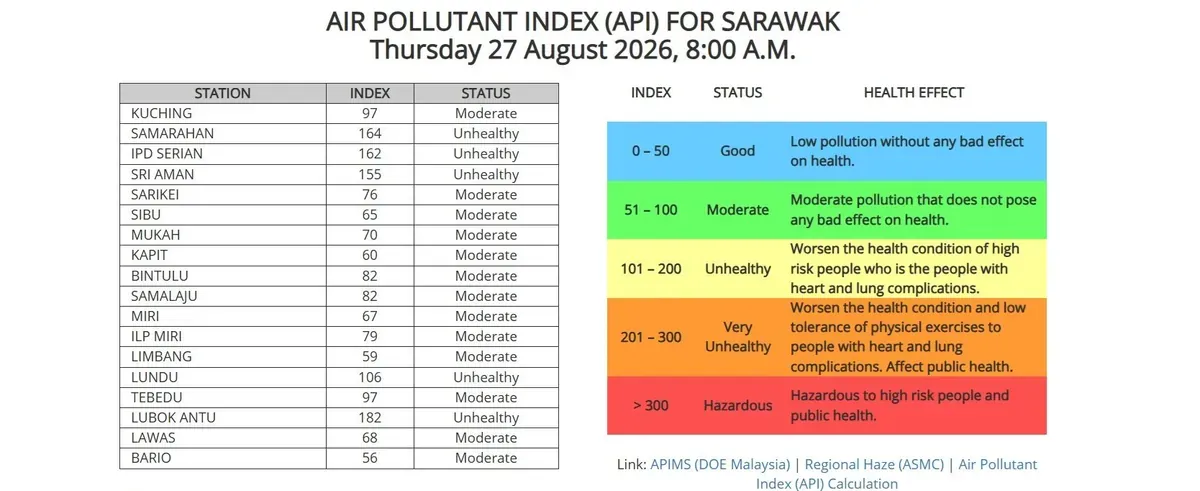
Lubok Antu recorded an Air Pollutant Index (API) of 182 as of 8am on Thursday, the highest reading in Sarawak. The Natural Resources and Environment Board's (NREB) Daily Haze Watch placed the area in the unhealthy category, which spans 101 to 200.
The daily report is part of NREB's monitoring of air quality across the state.
Why it matters
An API of 182 can affect human health, particularly for children, the elderly, and those with respiratory conditions. Prolonged exposure may cause discomfort or aggravate existing ailments.
The reading guides public health advisories and precautionary measures. Residents and authorities use NREB's updates to decide on outdoor activities.
Impact on Sarawak
Overall air quality in Sarawak has improved, with fewer areas in the unhealthy range. Lubok Antu, however, remains a persistent hotspot, showing regional disparities.
Recent weather patterns or fire suppression efforts may be helping. But the high reading in Lubok Antu needs continued attention from local authorities.
Background
Air pollution in Sarawak often comes from land and forest fires, especially during the dry season. The API is Malaysia's standard measure for classifying air quality into good, moderate, unhealthy, very unhealthy, and hazardous levels.
NREB publishes the Daily Haze Watch to keep the public informed. The board works with other agencies to monitor and respond to haze events.
Response
Residents in affected areas are advised to limit outdoor activities and wear masks when necessary. NREB continues to monitor and will provide updates as conditions change.
Local authorities may issue health advisories or coordinate with schools. The public should follow official channels for the latest information.
Outlook
Air quality in Sarawak will likely fluctuate with weather and fire activity. Ongoing monitoring is needed to track trends and reduce health risks.
If conditions worsen, more areas could enter the unhealthy range. Preventive actions, such as restrictions on controlled burning, remain important in reducing haze episodes.