Nine Sarawak locations record unhealthy air quality
What happened
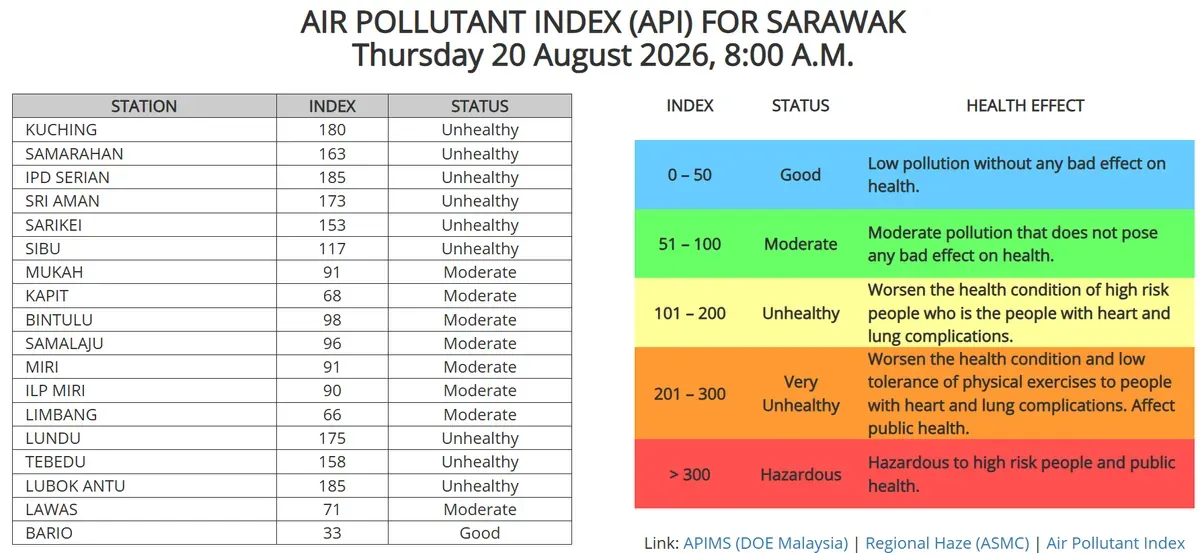
Nine locations in Sarawak recorded unhealthy air quality as of 8am Thursday, according to the Natural Resources and Environment Board’s (NREB) Daily Haze Watch. Serian and Lubok Antu logged the highest Air Pollutant Index (API) readings at 185 each. Kuching followed at 180, Lundu at 175, and Sri Aman lower.
The readings put several areas above the 100-point threshold that defines unhealthy air. NREB tracks API levels at monitoring stations across the state.
Why it matters
Unhealthy air poses health risks, especially for people with respiratory conditions. Prolonged exposure above 100 can cause breathing difficulties. Residents should limit outdoor activities and wear masks when going outside.
Haze in Sarawak often comes from land and forest fires, worsened by dry weather. NREB’s monitoring helps authorities respond and issue advisories.
Impact on Malaysia
The affected locations span several divisions, including Serian, Lubok Antu, Kuching, Lundu, and Sri Aman. These are among the state’s most populated areas, so many people are exposed. Haze could disrupt schools, outdoor work, and daily routines.
Sarawak’s economy relies on tourism, agriculture, and natural resources—all vulnerable to prolonged haze. Poor air quality may also increase hospital visits for respiratory issues.
Government response
NREB’s Daily Haze Watch is the primary source for air quality data in Sarawak, providing real-time API readings. The board continues to monitor and update advisories. Local authorities may ban open burning to reduce haze sources.
Residents are advised to check API readings regularly and follow health guidelines from the Ministry of Health. Schools and workplaces may adjust schedules if air quality worsens.
Broader context
Sarawak often sees haze during the dry season, when fires are more common. The API scale runs from good (0-50) to hazardous (300+), with unhealthy starting at 101. Current readings of 185 sit in the “unhealthy” band, below the “very unhealthy” threshold of 200.
Regional haze from neighboring countries can contribute, but local sources are usually the main cause. Climate patterns like El Niño can intensify dry conditions and worsen haze.
What to watch
Authorities will monitor API levels in the coming days. If readings exceed 200, NREB may issue stronger health advisories. The public should follow official NREB channels for updates.
Long-term, Sarawak may need stronger fire prevention and land management policies to reduce recurring haze. Sustainable practices and regional cooperation could help mitigate future episodes.