Nine Sarawak locations record unhealthy air quality
What happened
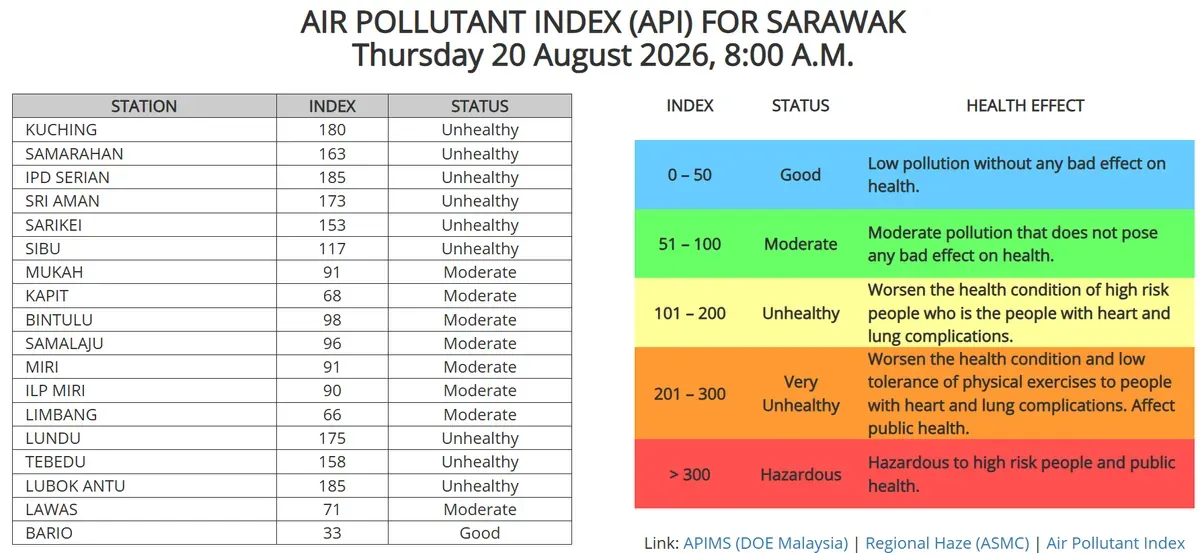
Nine locations in Sarawak recorded unhealthy air quality as of 8am on Thursday, according to the Natural Resources and Environment Board’s (NREB) Daily Haze Watch. Serian and Lubok Antu registered the highest Air Pollutant Index (API) readings at 185 each. Kuching recorded 180, followed by Lundu at 175 and Sri Aman at lower readings.
The data was published on Aug 20. The affected areas span multiple divisions across the state. NREB’s daily watch tracks API levels to inform the public about air quality conditions.
Why it matters
Unhealthy API readings signal potential health risks, especially for vulnerable groups such as children, the elderly, and those with respiratory conditions. The readings exceed the 100-200 range that Malaysia classifies as unhealthy. Prolonged exposure can lead to breathing difficulties and other health issues.
The haze may disrupt daily activities, including outdoor work and school sessions. Businesses in affected areas could face reduced productivity and lower foot traffic. The situation also raises concerns about the economic impact on tourism and outdoor industries in Sarawak.
Impact on Malaysia
The haze is a recurring regional issue, often driven by forest fires and land clearing. Sarawak’s air quality deterioration reflects broader environmental challenges facing Malaysia. The government may need to activate haze response plans, including distributing masks and advising residents to stay indoors.
Cross-border haze could strain relations with neighbouring countries if sources are external. Domestic mitigation efforts, such as cloud seeding and enforcement against open burning, may be intensified. The long-term economic cost includes healthcare expenses and lost workdays.
What authorities say
NREB has not issued a formal statement beyond the daily haze watch data. The board typically advises the public to reduce outdoor activities and wear masks when necessary. Local authorities may issue health advisories if readings worsen.
No emergency measures have been announced as of Thursday morning. The situation remains under monitoring, with updates expected in subsequent daily reports. Residents are urged to follow official guidance.
Background
Sarawak frequently experiences haze episodes during the dry season, typically from June to September. The API scale in Malaysia categorises readings above 100 as unhealthy. Previous severe episodes have led to school closures and work stoppages.
The current readings are below the very unhealthy threshold of 200, but still pose health risks. The pattern suggests a cyclical environmental issue that requires regional cooperation to address root causes.
Outlook
Air quality may fluctuate depending on wind direction and fire activity. If API readings exceed 200, authorities could declare a state of emergency in affected areas. Businesses should prepare contingency plans for potential disruptions.
Residents are advised to stay updated through official channels. The NREB will continue publishing daily haze watch data. Longer-term solutions depend on regional efforts to prevent land and forest fires.