


AIO Liquid Cooling vs CPU Air Coolers: Which is Best for
A practical Malaysian comparison of AIO liquid cooling and CPU air coolers, covering price bands, thermal performance in hot rooms, maintenance, and which pick…
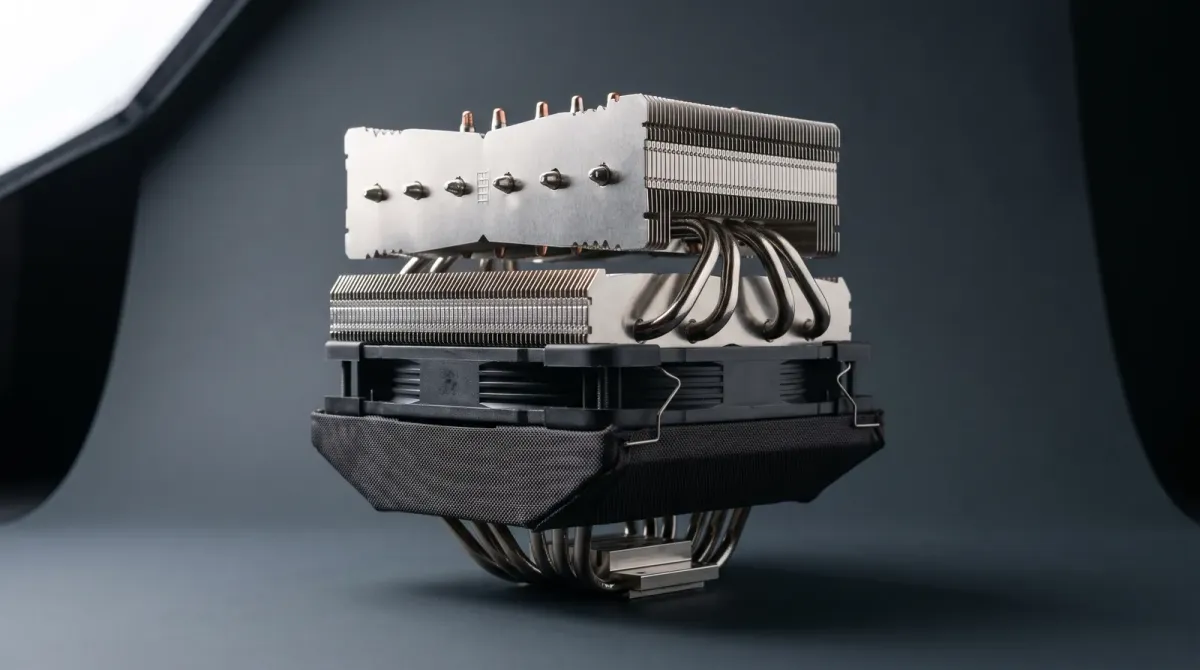
| Dimension | DeepCool LT720 (AIO liquid) | Thermalright Peerless Assassin 120 (air) |
|---|---|---|
| Cooling method | Pump, coolant loop, radiator, fans | Heatsink tower with fans |
| Price | check current price | check current price |
| Hot-room behaviour | Moves heat to radiator edge; stable under sustained load | Sheds heat inside case; needs strong airflow |
| Maintenance | Pump wear, leak check, fan cleaning | Dust cleaning and fan check only |
| Clearance | Frees socket area for tall RAM | Large tower may block tall RAM and top PCIe slot |
| Best for | Long renders, heavy CPU loads, cleaner look | Gaming, office work, low-maintenance builds |
This comparison shows how AIO liquid coolers and CPU air coolers differ on price, heat handling at Malaysian room temperatures, and upkeep, so you can pick the right cooler for your build.
The Short Answer
Air cooling uses a heatsink and fans to move heat off the CPU. Liquid cooling moves heat through a coolant loop to a radiator, where fans exhaust it. Both keep a CPU within safe limits. The real difference is how they handle sustained heat and how much space and upkeep they demand.
For most Malaysian builds, a strong air cooler like the Thermalright Peerless Assassin 120 covers daily gaming and work without leak anxiety or pump wear. Choose an AIO like the DeepCool LT720 when you run long sustained loads, want lower noise under load, or need clearance around tall RAM and a compact socket area.
Price Bands: What Money Buys
Entry money buys a tower air cooler with one or two fans. The Thermalright Peerless Assassin 120 sits in this band; check current price. It needs no pump, no tubing, and no coolant, so the only failure point is a fan.
Mid money buys a 240mm or 360mm AIO. The DeepCool LT720 is the liquid pick here; check current price. You pay for the pump, radiator, tubing, and fans, plus the assembly time to mount the radiator and route tubes.
Heat Handling in Malaysian Rooms
Liquids carry heat more efficiently than air because they have higher heat capacity and thermal conductivity. That matters when your room sits at 30°C or above and the CPU holds a boost clock for hours. A radiator can move that heat to a case edge where exhaust is easier.
Air coolers still work in hot rooms. A dual-tower heatsink with good case airflow sheds heat steadily and has no pump to degrade. The trade-off: a big heatsink dumps heat inside the case, so intake and exhaust fans must keep up.
Maintenance and Risk
Air cooling needs almost nothing. Dust the fins, check the fan, and it keeps running. There is no leak path and no pump noise. That simplicity is why many builders in local groups prefer air for low-maintenance builds.
AIOs add a pump, tubing, and a sealed loop. Pumps wear out, and a leak, however rare, can damage parts. Mount the radiator so the pump sits below the top of the loop, and check coolant and fan behaviour every few months.
Platform and Upgrades
Check socket support before you buy. Both picks ship with mounting kits for current Intel and AMD sockets, but confirm the bracket for your exact CPU. A large air tower can block tall RAM and the top PCIe slot, so measure clearance first.
An AIO frees the area around the socket, which helps with tall RAM and compact boards. It also moves weight to the case frame. If you plan to move the PC often, an air cooler is simpler to transport because there is no loop to stress.
Which Should You Buy
Buy the Thermalright Peerless Assassin 120 if you want a quiet, low-maintenance cooler for gaming and office work, and your case has room for a dual tower. Buy the DeepCool LT720 if you run long renders, heavy CPU workloads, or want socket clearance and a cleaner look.
Either way, case airflow decides the result. In a Malaysian room, two intake fans and one exhaust fan do more for temperatures than switching cooler type alone.
Sources
- lenovo.com — Liquid vs air cooling definition
- hp.com — Liquid cooling benefits for gaming
- blog.se.com — Heat capacity and conductivity comparison
- teamgroupinc.com — Air vs liquid cooling components
- facebook.com — Builder views on maintenance and leaks
- tglobalcorp.com — Airflow and heatsink basics