



ASUS Zenbook DUO (2026): Does This Laptop Deliver the
A Malaysian buyer's roundup of the dual-screen Zenbook DUO (2026) against four alternatives, judged on screen setup, real-world performance and battery, and…
| Laptop | CPU | GPU | Display | Memory | Storage | Battery | Price (RM) |
|---|---|---|---|---|---|---|---|
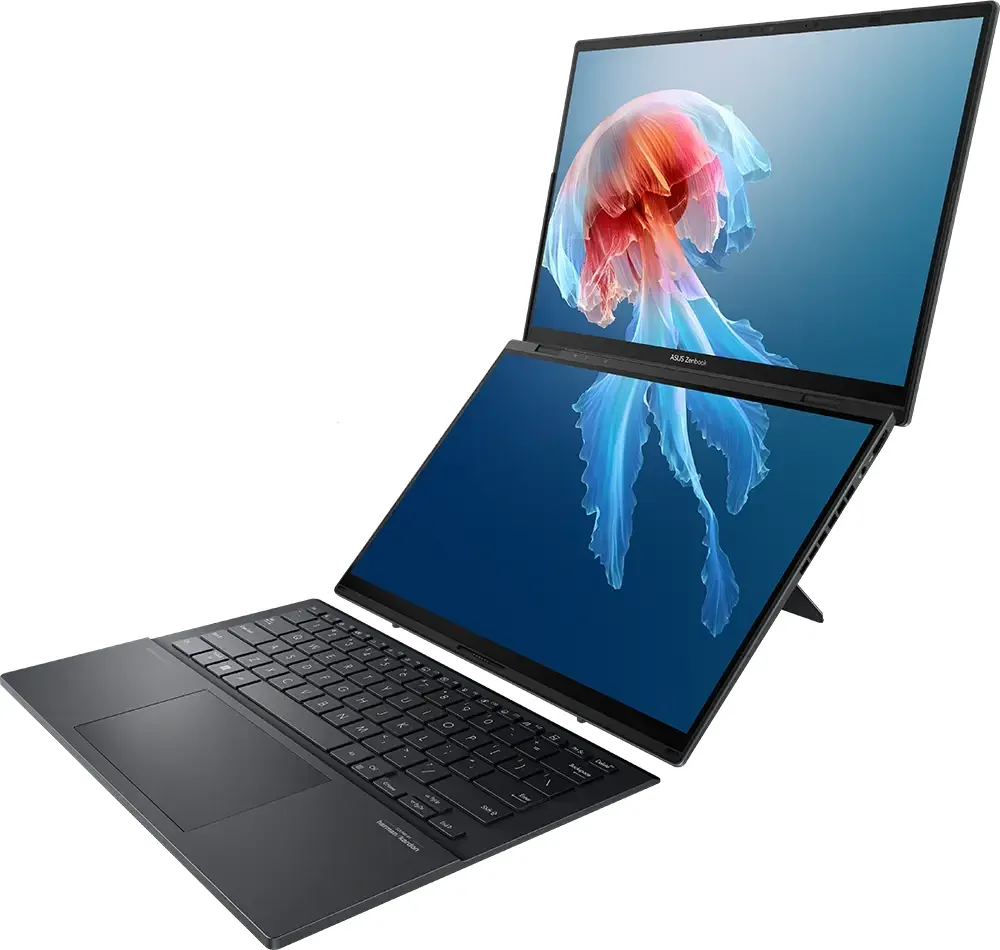
| ASUS Zenbook DUO (2024) UX8406 | Intel ® Core ™ Ultra 9 processor (Series 2) | — | Dual 14” full-size 3K OLED touchscreens | 32 GB LPDDR5x memory | up to a 2 TB PCIe ® 4.0 SSD | 75 Wh battery | — |
| ASUS Zenbook 14 OLED UX3405 | Intel® Core™ Ultra 9 Processor 185H 2.3 GHz (24MB Cache, up to 5.1 GHz, 16 cores, 22 Threads); Intel® AI Boost NPU up to 11TOPS | Intel® Arc™ Graphics | 14.0-inch, 3K (2880 x 1800) OLED 16:10 aspect ratio, 0.2ms response time, Refresh Rate:120Hz, 400nits, 500nits HDR peak brightness, 100% DCI-P3 color gamut, 1,000,000:1, VESA CERTIFIED Display HDR True Black 500, 1.07 billion colors, 70% less harmful blue light, TÜV Rheinland-certified, SGS Eye Care Display, Touch screen, (Screen-to-body ratio)87%, With stylus support | 32GB LPDDR5X on board | 1TB M.2 NVMe™ PCIe® 4.0 SSD | — | — |
| ASUS Vivobook Pro 15 OLED N6506 | Intel® Core™ Ultra 9 Processor 185H 2.3 GHz (24MB Cache, up to 5.1 GHz, 16 cores, 22 Threads); Intel® AI Boost NPU up to 11TOPS | NVIDIA® GeForce RTX™ 4050 Laptop GPU (194 AI TOPs) 6GB GDDR6 | 15.6-inch, 3K (2880 x 1620) OLED 16:9 aspect ratio, 0.2ms response time, Refresh Rate:120Hz, 400nits, 500nits HDR peak brightness, 100% DCI-P3 color gamut, 1,000,000:1, VESA CERTIFIED Display HDR True Black 600, 1.07 billion colors, PANTONE Validated, Anti-glare and low-reflection(AGLR) display, 70% less harmful blue light, TÜV Rheinland-certified, Non-touch screen, (Screen-to-body ratio)84% | 8GB DDR5 on board 16GB DDR5 SO-DIMM Max Total system memory up to:24GB | 2TB M.2 NVMe™ PCIe® 4.0 SSD | 75WHrs, 4S1P, 4-cell Li-ion | — |
| ASUS Vivobook S Series (2024) – S5406 / S5506 / S5606 / M5406 / M5506 / M5606 | Up to Intel ® Core™ Ultra 9 Processor | — | 15.6” 3K 120 Hz OLED HDR display | Up to 16 GB memory | Up to 1 TB SSD storage | Long-lasting 75 Wh battery | — |
| MacBook Air 13-inch (M3) | Apple M3 chip 8-core CPU with 4 performance cores and 4 efficiency cores | 8-core GPU | Liquid Retina display 13.6-inch (diagonal) LED-backlit display with IPS technology;¹ 2560-by-1664 native resolution at 224 pixels per inch 500 nits brightness Support for 1 billion colors Wide color (P3) True Tone technology | 8GB unified memory | 256GB SSD² | Up to 18 hours Apple TV app movie playback⁴ Up to 15 hours wireless web⁴ 52.6-watt-hour lithium-polymer battery⁴ | 2,962 |
The Zenbook DUO (2026) promises two 14-inch screens in one bag — here is what that costs you in ringgit, and whether the experience matches the pitch for Malaysian buyers.
Malaysia's dual-screen premium, priced in ringgit
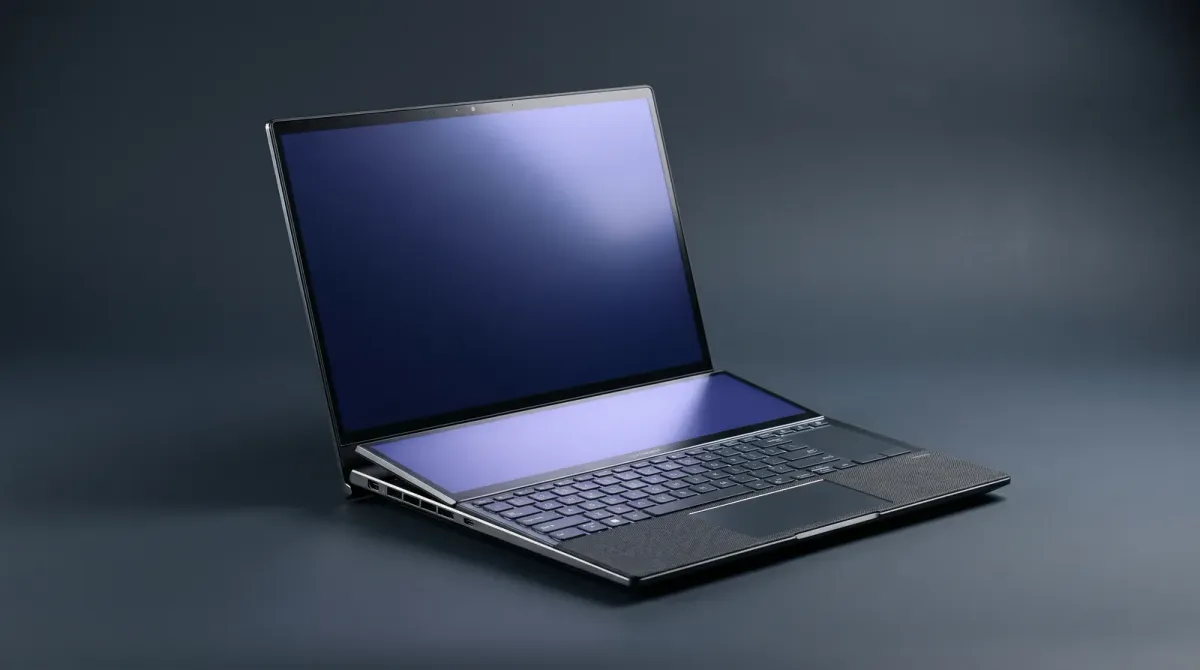
The dual-screen idea is no longer exotic, but it is still expensive. The Zenbook DUO (2026) sits at RM11,999, while the 2024 model it replaces is listed at RM9,999. ASUS pitches the new model around two 14-inch 3K Lumina Pro OLED panels, a redesigned lay-flat hinge that narrows the gap between screens, a six-speaker Dolby Atmos system and a MagLatch keyboard dock.
That is a big outlay next to a conventional OLED ultraportable. The Zenbook 14 OLED UX3405 lists at RM4,499 and the Vivobook S Series (2024) at RM4,599. The MacBook Air 13-inch (M3) comes in at RM5,199. If you mainly write documents and take video calls, the second screen is a luxury, not a requirement.
The case for the DUO is workspace per kilogram. CNET measured roughly 19.8 inches of workspace across the two 16:10 3K 120Hz displays, in a package just under 1.4kg. For a Malaysian freelancer or creator who bills by output, that trade can pay for itself.
Our 5 Picks at a Glance
This roundup covers the ASUS Zenbook DUO (2024) UX8406 at RM9,999 as the proven dual-screen option, and the ASUS Zenbook DUO (2026) at RM11,999 as the newer design with the lay-flat hinge and six speakers. For single-screen buyers we include the ASUS Zenbook 14 OLED UX3405 at RM4,499, the ASUS Vivobook Pro 15 OLED N6506 at RM7,899 and the ASUS Vivobook S Series (2024) at RM4,599. The MacBook Air 13-inch (M3) at RM5,199 rounds out the list as the conventional benchmark. Each pick is weighed below on screen setup, performance and battery, and price.
Screen setup and everyday ergonomics
The DUO's headline is two full touchscreens, not a main panel plus a strip. Reviewers note the detachable keyboard includes a full trackpad and attaches securely over the bottom screen, so the machine closes like a normal clamshell. Mashable's tester called the keyboard almost as good as an M2 MacBook Air's.
Dual-screen life has friction. Mobilesyrup reported occasional software bugs that made the DUO more annoying to use, though the issues were minor. Budget time to learn the ScreenXpert gestures, including summoning the virtual keyboard with a three-finger tap. The 2026 model adds auto-detection when the lid opens beyond 175°, which triggers sharing and annotation tools.
If you want one dependable panel, the Zenbook 14 OLED UX3405 and Vivobook S Series keep things simple. The Vivobook Pro 15 OLED N6506 gives creators a larger 15.6-inch OLED canvas, and the MacBook Air 13-inch (M3) stays the lightest, simplest carry.
Performance and battery in real use
A dual-screen laptop with integrated graphics is a productivity and creator tool, not a gaming rig. A hands-on review noted the DUO handles video calls, video editing and music production, and runs light games such as Minecraft, but it will not replace a gaming laptop. Mobilesyrup's Intel Core Ultra 9 185H unit with 32GB RAM delivered decent performance with middling battery life.
The 2026 model moves to up to an Intel Core Ultra X9 Series 3 processor with a 99Wh dual-battery layout. ASUS claims extended runtime and desktop-grade performance, though Malaysian buyers should verify real-world battery figures locally before committing.
Upgradability matters at this price. A buyer's guide notes the DUO's RAM is not upgradeable, but the M.2 SSD is easy to reach through a rear hatch. The Vivobook Pro 15 OLED N6506 targets creators who need discrete RTX graphics, while the Zenbook 14 OLED UX3405 and MacBook Air 13-inch (M3) suit lighter, all-day workloads.
Where to Buy and What to Check
Buy through ASUS Malaysia's official store or authorised retailers so you get local warranty coverage. Confirm the exact configuration before paying, because DUO pricing varies by processor, RAM and storage tier.
Ask to test the keyboard dock and the ScreenXpert software in person. Check the hinge, the lay-flat mode and the virtual keyboard response, since these define the dual-screen experience. For the 2026 model, confirm the six-speaker setup and the MagLatch dock are included in the unit you are quoted.
Compare final prices across the Zenbook DUO (2024) UX8406, Zenbook 14 OLED UX3405, Vivobook Pro 15 OLED N6506, Vivobook S Series (2024) and MacBook Air 13-inch (M3). If a listed model has no price on the page, write down "check current price" and confirm with the seller rather than assuming.
ASUS Zenbook DUO (2024) UX8406
Dual 14-inch OLED screens for serious multitasking
Pros
- Two full 14-inch OLED touchscreens
- Detachable keyboard with full trackpad
- Multiple usage modes with built-in kickstand
- Good port selection including Thunderbolt 4
Cons
- Quiet audio
- Forgettable webcam
- Heavier with keyboard attached
Features
Dual 14-inch 3K 120Hz OLED touchscreens; Intel Core Ultra 5/7/9; detachable Bluetooth keyboard; built-in kickstand; up to 1.35kg. Includes HDMI 2.1, USB Type-A, two Thunderbolt 4 ports, and a headset jack.
Performance
Excellent for app-juggling and productivity with two full screens. Integrated graphics handle light gaming and daily tasks well, but it's not a gaming laptop.
ASUS Zenbook 14 OLED UX3405
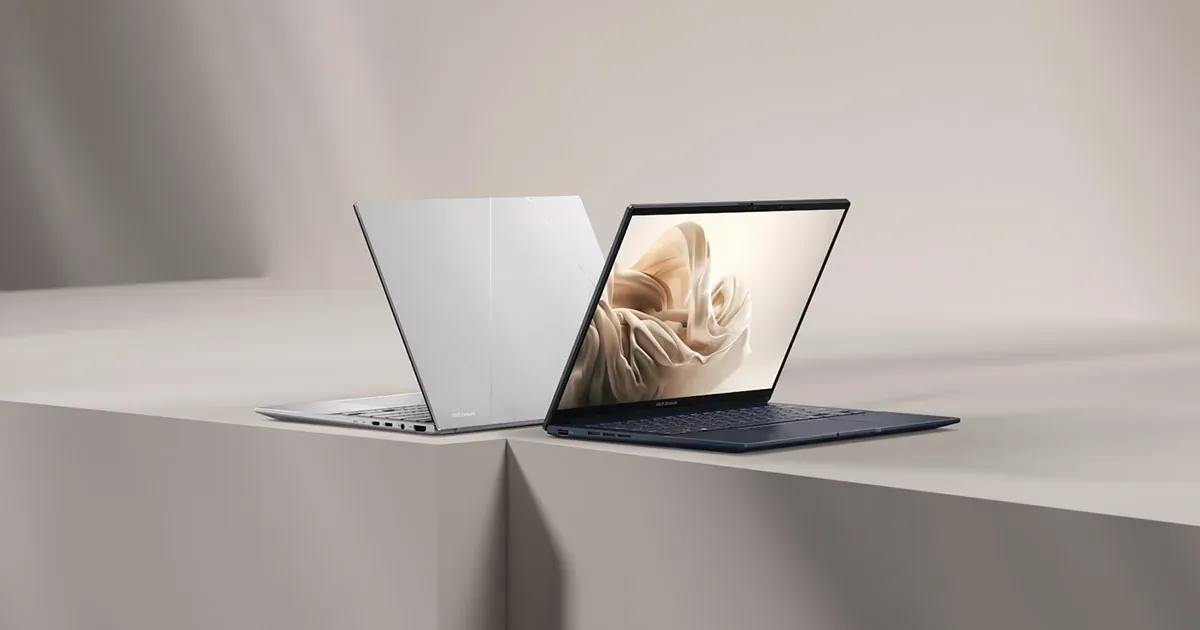
Premium ultraportable with a stunning OLED display
Pros
- Vibrant 3K OLED display
- Lightweight and portable
- Up to 32GB LPDDR5X memory
- Wi-Fi 6E connectivity
Cons
- Integrated graphics only
- Limited to 14-inch screen size
Features
14-inch 3K OLED 120Hz display; Intel Core Ultra 5/7 processors; up to 32GB LPDDR5X; PCIe 4.0 SSD; Wi-Fi 6E.
Performance
Great for everyday productivity and media consumption. The OLED screen is excellent for creative work, but heavy gaming or 3D rendering will be limited by integrated graphics.
ASUS Vivobook Pro 15 OLED N6506
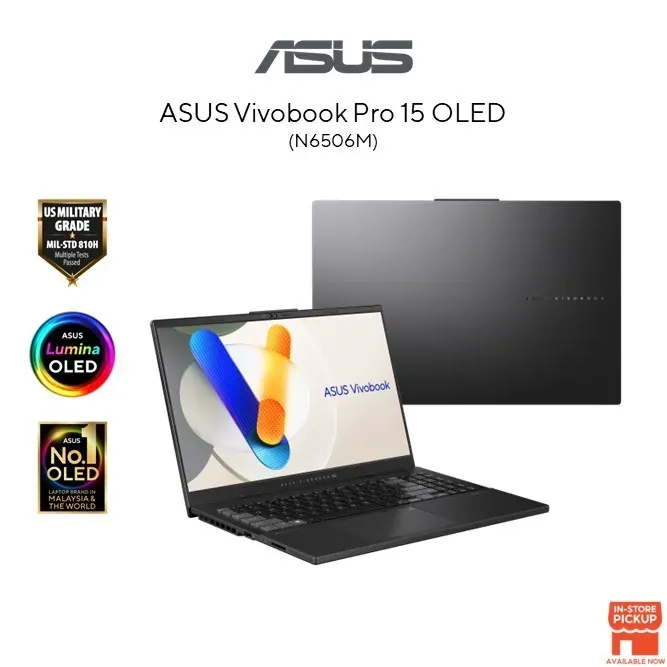
Creator-focused laptop with OLED and RTX graphics
Pros
- 15.6-inch OLED display
- NVIDIA GeForce RTX graphics on selected configs
- Intel Core Ultra processor options
- Creator-focused performance
Cons
- Likely heavier than ultraportables
- RTX graphics only on selected configurations
Features
15.6-inch OLED display; Intel Core Ultra processor options; NVIDIA GeForce RTX laptop graphics on selected configurations; creator-focused performance and OLED colour.
Performance
Well-suited for content creation, video editing, and design work thanks to the OLED screen and optional RTX graphics. Can handle some gaming, but it's primarily a creator machine.
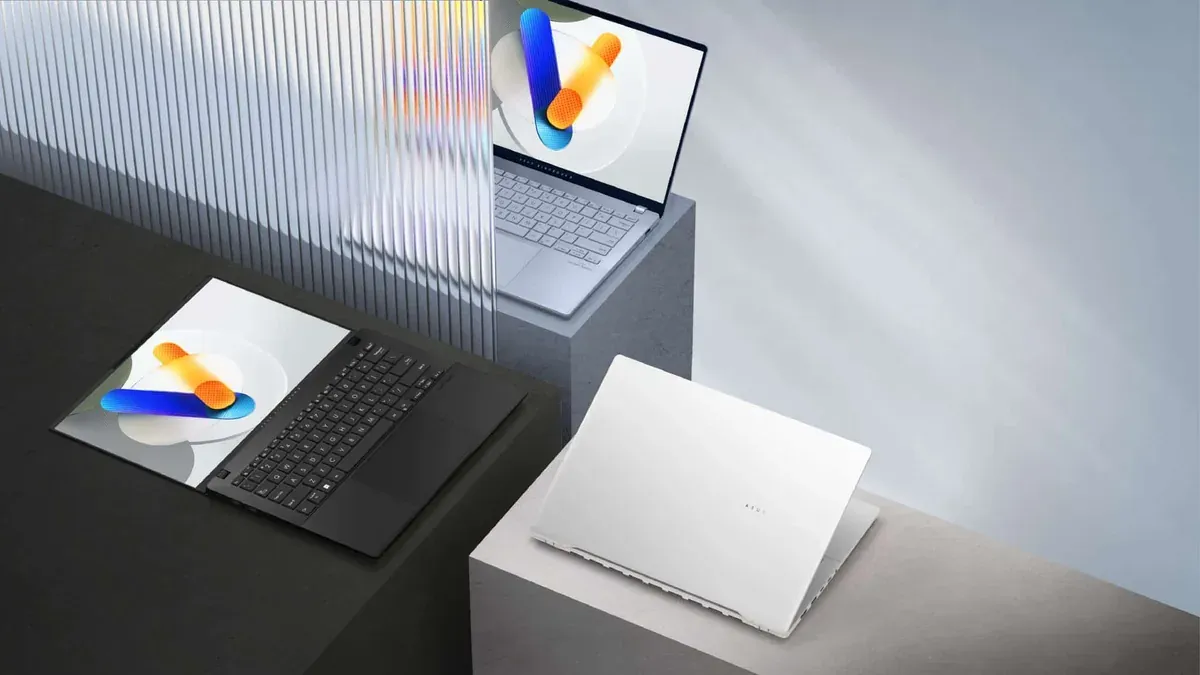
ASUS Vivobook S Series (2024) – S5406 / S5506 / S5606 / M5406 / M5506 / M5606
Versatile thin-and-light family with Intel or AMD options
Pros
- Choice of Intel Core Ultra or AMD Ryzen 8040-series
- 14-, 15.6-, and 16-inch models
- OLED options available
- Copilot key for AI features
Cons
- Specs vary significantly between models
- Not a dedicated gaming or creator line
Features
2024 14-, 15.6- and 16-inch models; Intel Core Ultra or AMD Ryzen 8040-series options; OLED options; Windows 11 and Copilot key.
Performance
Balanced performance for everyday tasks, office work, and media. The range of sizes and processors lets you pick the right fit, but high-end gaming or heavy rendering may require a more powerful laptop.
MacBook Air 13-inch (M3)
Fanless, all-day battery ultraportable with Apple M3
RM2,962RRP USD 719
No official MYR price — approx. converted from USD 719 at 4.1200 (BNM, 2026-11-20)
Pros
- Apple M3 chip for efficient performance
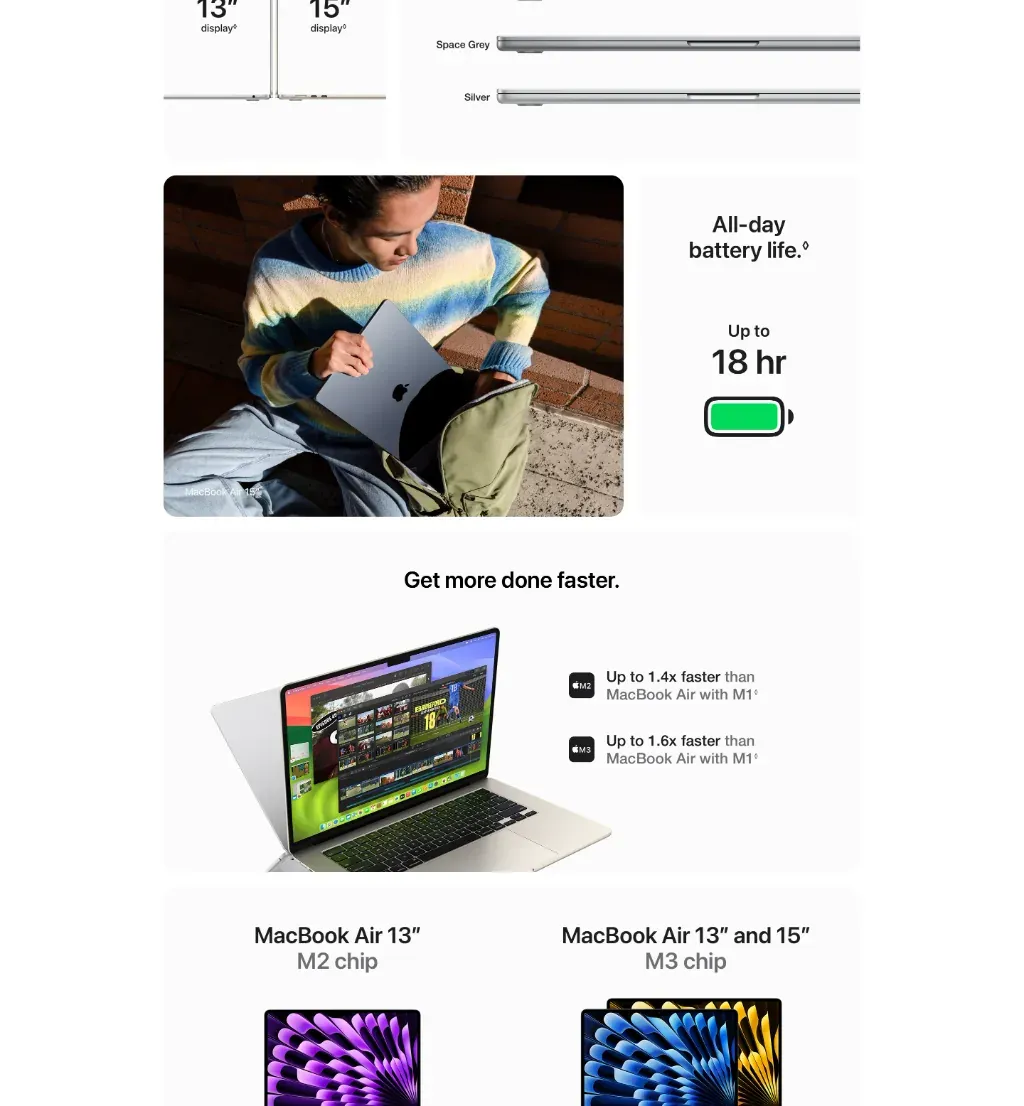
- Up to 18-hour battery life
- Fanless, silent design
- Supports up to two external displays with lid closed
Cons
- Limited to 13.6-inch screen
- No touchscreen or dual-display option
Features
Apple M3 chip; 13.6-inch Liquid Retina display; up to 18-hour battery life; fanless aluminium design; support for up to two external displays when lid is closed.
Performance
Excellent for everyday productivity, web browsing, and creative light work. The fanless design means silent operation, but sustained heavy workloads may throttle compared to actively cooled laptops.
Sources
- press.asus.com — Zenbook DUO 2026 specs and features
- cnet.com — dual 14-inch 3K 120Hz displays, 19.8 inches workspace, 1.4kg
- mobilesyrup.com — performance, battery life and software bugs
- sea.mashable.com — detachable keyboard and virtual keyboard experience
- youtube.com — real-world multitasking and light gaming limits
- youtube.com — SSD upgrade path and non-upgradeable RAM
- asus.com — Zenbook DUO 2024 specs and RM9,999 price
- asus.com — Zenbook 14 OLED UX3405 specs and RM4,499 price