



MacBook Air 13-inch (M3) Review: Everyday Strengths
A roundup review of the MacBook Air 13-inch (M3) and four ASUS alternatives, judged on the everyday strengths Malaysian buyers actually feel: silent fanless…
| Laptop | CPU | GPU | Display | Memory | Storage | Battery | Price (RM) |
|---|---|---|---|---|---|---|---|
| ASUS Zenbook DUO (2024) UX8406 | Intel ® Core ™ Ultra 9 processor (Series 2) | — | Dual 14” full-size 3K OLED touchscreens | 32 GB LPDDR5x memory | up to a 2 TB PCIe ® 4.0 SSD | 75 Wh battery | — |
| ASUS Zenbook 14 OLED UX3405 | Intel® Core™ Ultra 9 Processor 185H 2.3 GHz (24MB Cache, up to 5.1 GHz, 16 cores, 22 Threads); Intel® AI Boost NPU up to 11TOPS | Intel® Arc™ Graphics | 14.0-inch, 3K (2880 x 1800) OLED 16:10 aspect ratio, 0.2ms response time, Refresh Rate:120Hz, 400nits, 500nits HDR peak brightness, 100% DCI-P3 color gamut, 1,000,000:1, VESA CERTIFIED Display HDR True Black 500, 1.07 billion colors, 70% less harmful blue light, TÜV Rheinland-certified, SGS Eye Care Display, Touch screen, (Screen-to-body ratio)87%, With stylus support | 32GB LPDDR5X on board | 1TB M.2 NVMe™ PCIe® 4.0 SSD | — | — |
| ASUS Vivobook Pro 15 OLED N6506 | Intel® Core™ Ultra 9 Processor 185H 2.3 GHz (24MB Cache, up to 5.1 GHz, 16 cores, 22 Threads); Intel® AI Boost NPU up to 11TOPS | NVIDIA® GeForce RTX™ 4050 Laptop GPU (194 AI TOPs) 6GB GDDR6 | 15.6-inch, 3K (2880 x 1620) OLED 16:9 aspect ratio, 0.2ms response time, Refresh Rate:120Hz, 400nits, 500nits HDR peak brightness, 100% DCI-P3 color gamut, 1,000,000:1, VESA CERTIFIED Display HDR True Black 600, 1.07 billion colors, PANTONE Validated, Anti-glare and low-reflection(AGLR) display, 70% less harmful blue light, TÜV Rheinland-certified, Non-touch screen, (Screen-to-body ratio)84% | 8GB DDR5 on board 16GB DDR5 SO-DIMM Max Total system memory up to:24GB | 2TB M.2 NVMe™ PCIe® 4.0 SSD | 75WHrs, 4S1P, 4-cell Li-ion | — |
| ASUS Vivobook S Series (2024) – S5406 / S5506 / S5606 / M5406 / M5506 / M5606 | Up to Intel ® Core™ Ultra 9 Processor | — | 15.6” 3K 120 Hz OLED HDR display | Up to 16 GB memory | Up to 1 TB SSD storage | Long-lasting 75 Wh battery | — |
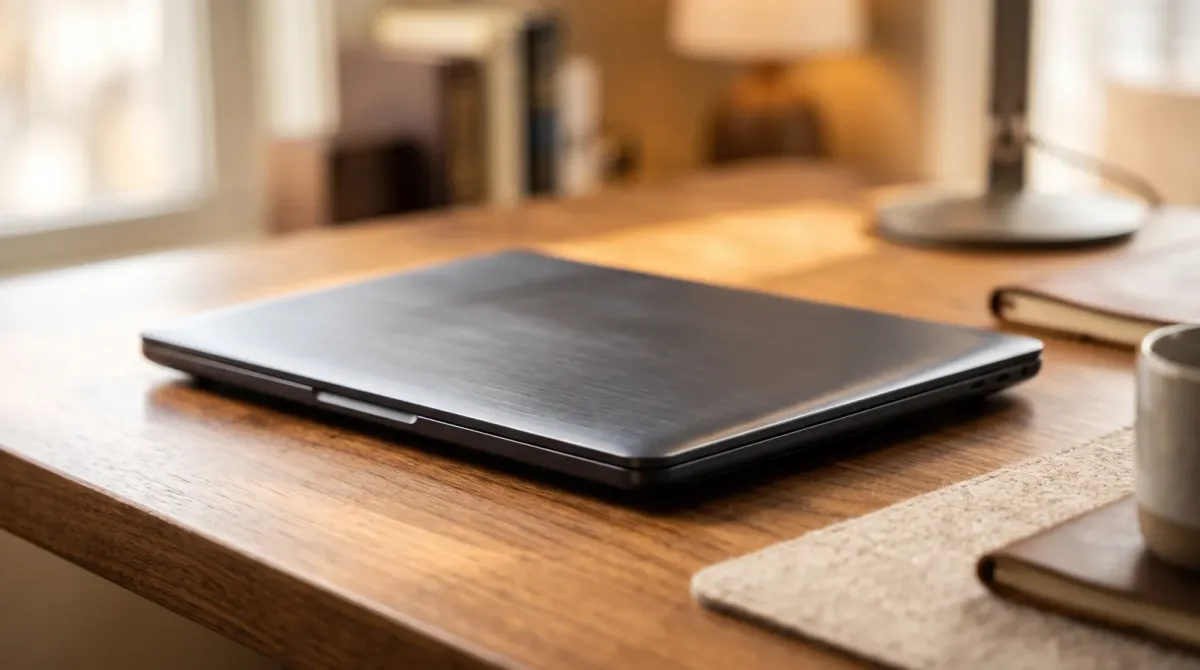
| MacBook Air 13-inch (M3) | Apple M3 chip 8-core CPU with 4 performance cores and 4 efficiency cores | 8-core GPU | Liquid Retina display 13.6-inch (diagonal) LED-backlit display with IPS technology;¹ 2560-by-1664 native resolution at 224 pixels per inch 500 nits brightness Support for 1 billion colors Wide color (P3) True Tone technology | 8GB unified memory | 256GB SSD² | Up to 18 hours Apple TV app movie playback⁴ Up to 15 hours wireless web⁴ 52.6-watt-hour lithium-polymer battery⁴ | 2,962 |
This roundup weighs the MacBook Air 13-inch (M3) against four ASUS laptops on the everyday strengths that matter to Malaysian buyers. Silent fanless work, battery life that survives a commute and a full workday, screen quality and price.
Malaysia's ultraportable market rewards quiet, all-day laptops
Malaysian buyers shopping thin-and-light laptops usually juggle the same demands: a machine light enough for the LRT, a battery that lasts a full office day, and a price that makes sense against the Windows options on the shelf. The MacBook Air 13-inch (M3) lands at RM5,199, which puts it in the same conversation as the ASUS Zenbook 14 OLED UX3405 at RM4,499 and the ASUS Vivobook S Series (2024) at RM4,599.
Above that sit the ASUS Vivobook Pro 15 OLED N6506 at RM7,899 and the dual-screen ASUS Zenbook DUO (2024) UX8406 at RM9,999. Each answers a different everyday need, so the right pick depends on how you actually use a laptop rather than on a single benchmark score.
Our 5 Picks at a Glance
This roundup covers the MacBook Air 13-inch (M3), the ASUS Zenbook DUO (2024) UX8406, the ASUS Zenbook 14 OLED UX3405, the ASUS Vivobook Pro 15 OLED N6506 and the ASUS Vivobook S Series (2024) – S5406 / S5506 / S5606 / M5406 / M5506 / M5606. The Air is the quiet fanless benchmark for everyday work, while the Zenbook DUO brings dual 14-inch 3K 120Hz OLED touchscreens, the Zenbook 14 OLED and Vivobook S Series compete on price, and the Vivobook Pro 15 OLED targets heavier creative loads.
Everyday performance and the fanless advantage
The Air's M3 chip runs without a fan, so it stays silent through browsing, spreadsheets and video calls. Reviewers report it handles thirty Chrome tabs alongside Spotify, Photoshop and messaging apps without strain, and T3 measured an effective 43% multi-core boost over M1. That headroom covers most office and student workloads.
Heavy exports still push it. T3 notes intensive tasks cause some heat, and the fanless M3 is not as powerful as the MacBook Pro version. The ASUS Vivobook Pro 15 OLED N6506 at RM7,899 is the pick here if your day is mostly rendering and large creative files.
The ASUS Zenbook DUO (2024) UX8406 at RM9,999 suits buyers who want dual 14-inch 3K 120Hz OLED touchscreens for multitasking. The ASUS Zenbook 14 OLED UX3405 at RM4,499 pairs a 14-inch 3K OLED 120Hz display with Intel Core Ultra 5/7 chips and up to 32GB LPDDR5X.
Battery life, weight and the screen you stare at
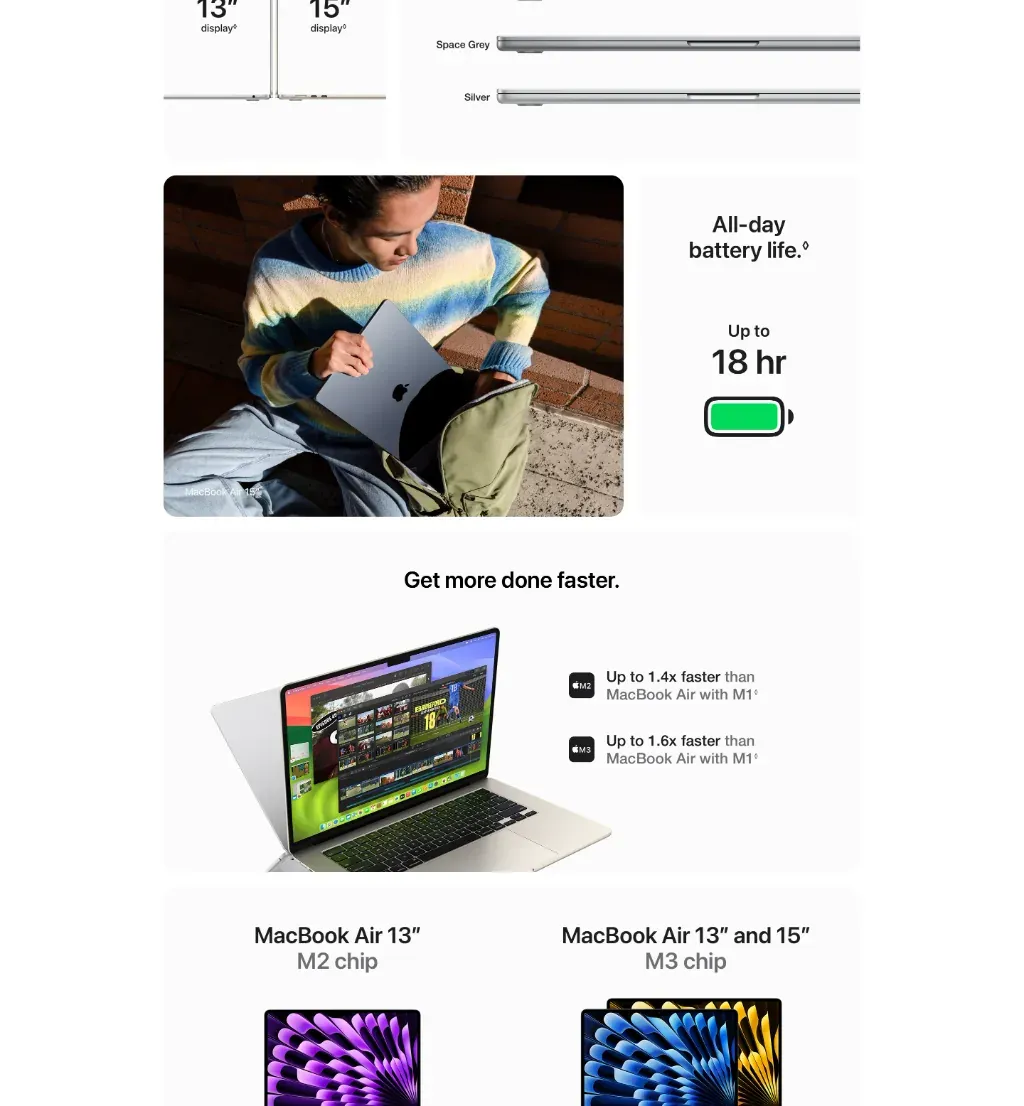
Battery is where the Air earns its keep. Apple rates the 13-inch at up to 18 hours, and one reviewer reports getting through two full workdays, with video editing or gaming dropping that to around 4 to 5 hours. Standby is strong too, with one long-term user going over two weeks without charging.
The 13.6in Liquid Retina panel runs 2,650 x 1,664 at 500 nits with P3 colour, though IT Pro flags the 60Hz refresh rate against 120Hz Windows rivals. At 1.24kg, the Air slides into a backpack easily, and the aluminium body, keyboard and large trackpad draw consistent praise.
The Vivobook S Series (2024) family at RM4,599 gives you several chassis and chip options under one badge. If a high-refresh OLED matters more than macOS, the Zenbook 14 OLED UX3405 covers it for less.
Ports, storage and the upgrade question
Port selection is the Air's clearest compromise. Reviewers point to limited ports compared with the MacBook Pro, and the M3 Air supports two external displays. Reviewed also flags slow SSD performance, so check the storage tier you configure.
Owners of an M2 Air should think twice. IT Pro calls the M3 model not much better than the M2 and says there is better value in the older model, while Reviewed labels it a marginal upgrade. The M3 Neural Engine is faster, but that alone rarely justifies a generation jump.
If you need an SD card reader, HDMI and more USB-C, the MacBook Pro line or a creator-focused ASUS model fits better. The notch also draws nitpicks, though most reviewers treat it as minor.
Where to Buy and What to Check
Buy the MacBook Air 13-inch (M3) through Apple Malaysia or authorised resellers, and confirm the RAM and storage tier before paying, since the RM5,199 figure covers the base configuration. Ask whether the unit is local warranty stock, and check the return window on custom orders.
For the ASUS picks, compare the Zenbook DUO (2024) UX8406 at RM9,999, the Zenbook 14 OLED UX3405 at RM4,499, the Vivobook Pro 15 OLED N6506 at RM7,899 and the Vivobook S Series (2024) at RM4,599 on ASUS Malaysia and at local retailers. Confirm the exact model code, since the S Series spans six variants.
Check the display refresh rate, port layout and SSD size in person where possible. If you already own an M2 Air, compare the M3 side by side before upgrading.
ASUS Zenbook DUO (2024) UX8406
Dual-screen ultraportable for multitaskers who want more screen
Pros
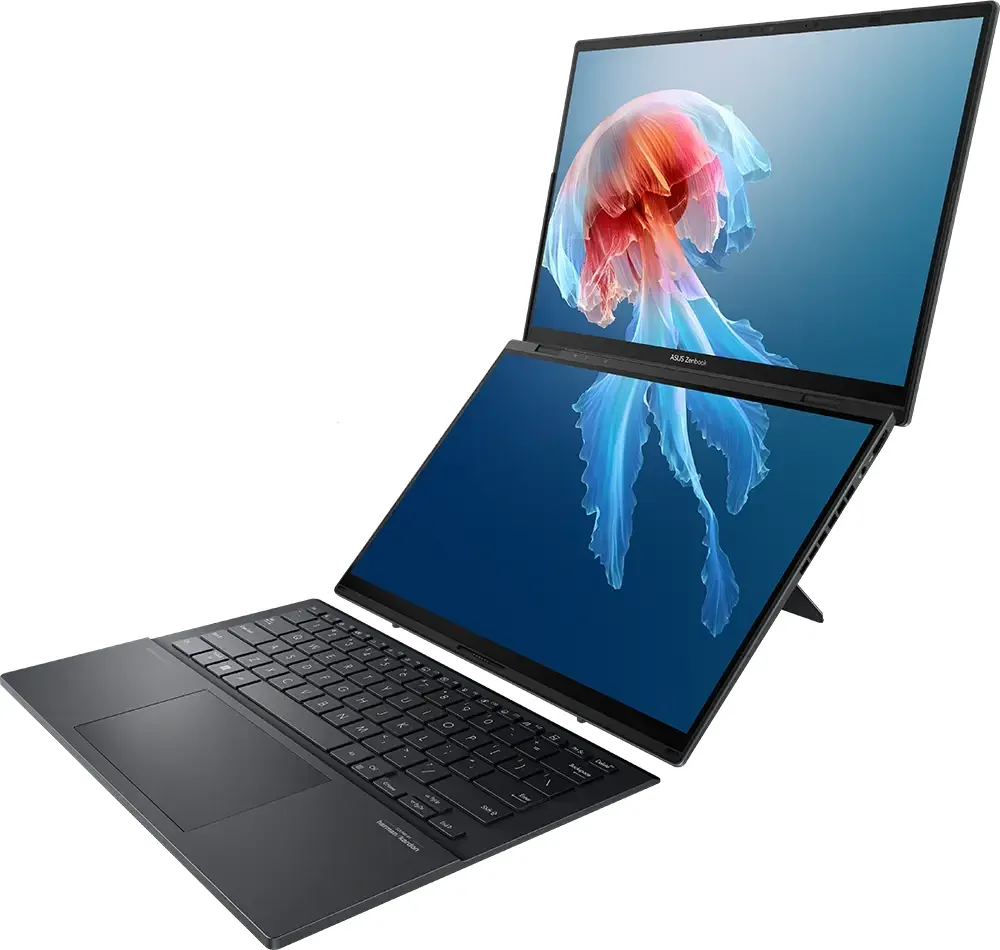
- Two 14-inch 3K 120Hz OLED touchscreens
- Detachable Bluetooth keyboard and built-in kickstand
- Intel Core Ultra 5/7/9 options
- Ultraportable at up to 1.35kg
Cons
- Premium price at RM9,999
- Dual-screen setup adds complexity over a standard laptop
Features
Dual 14-inch 3K 120Hz OLED touchscreens with a detachable Bluetooth keyboard and built-in kickstand. Powered by Intel Core Ultra 5/7/9 processors in a chassis weighing up to 1.35kg.
Performance
The stacked dual OLED displays give a huge canvas for productivity and creative work, and the detachable keyboard lets it switch between laptop and dual-screen modes. It is the most expensive pick here, so it suits buyers who genuinely use the extra screen real estate.
ASUS Zenbook 14 OLED UX3405
Premium 14-inch OLED ultraportable with Intel Core Ultra
Pros
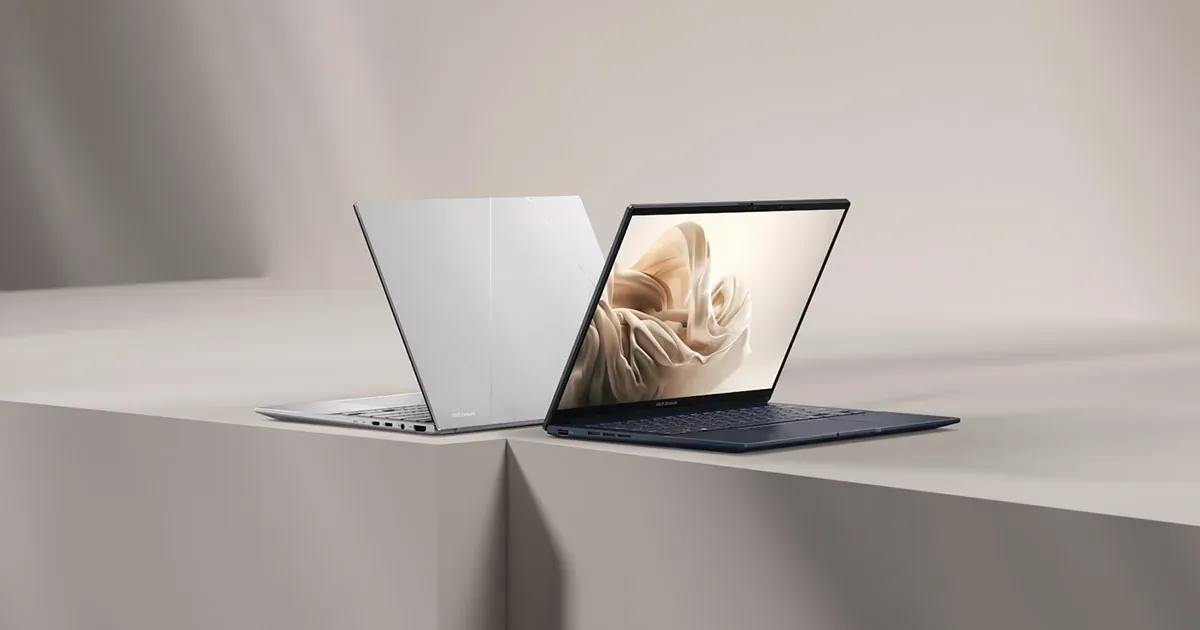
- 14-inch 3K OLED 120Hz display
- Intel Core Ultra 5/7 processors
- Up to 32GB LPDDR5X memory
- Wi-Fi 6E connectivity
Cons
- No discrete GPU option mentioned
- OLED panel is the main draw over cheaper LCD rivals
Features
A 14-inch 3K OLED 120Hz display paired with Intel Core Ultra 5/7 processors, up to 32GB LPDDR5X memory, PCIe 4.0 SSD storage and Wi-Fi 6E.
Performance
A thin-and-light built for everyday productivity and media work, with the high-refresh OLED panel giving it an edge for content consumption. It lacks a discrete GPU, so heavy gaming and 3D work are better served elsewhere.
ASUS Vivobook Pro 15 OLED N6506
Creator laptop with OLED colour and RTX graphics options
Pros
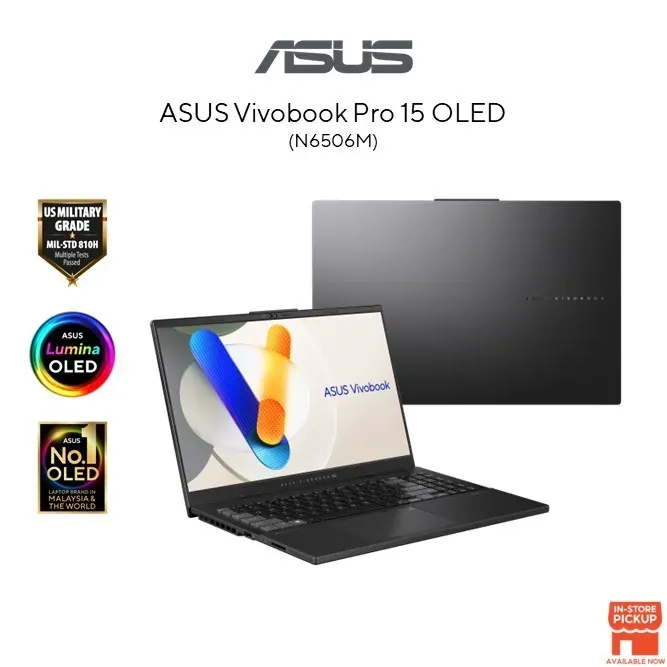
- 15.6-inch OLED display
- Intel Core Ultra processor options
- NVIDIA GeForce RTX laptop graphics on selected configurations
- Creator-focused performance
Cons
- RTX graphics only on selected configurations
- Bigger and heavier than the 14-inch ultraportables
Features
A 15.6-inch OLED display with Intel Core Ultra processor options and NVIDIA GeForce RTX laptop graphics on selected configurations.
Performance
Built for creators who need OLED colour accuracy plus GPU acceleration for editing and rendering. Buyers should check the configuration carefully, since the RTX graphics are only on selected models.
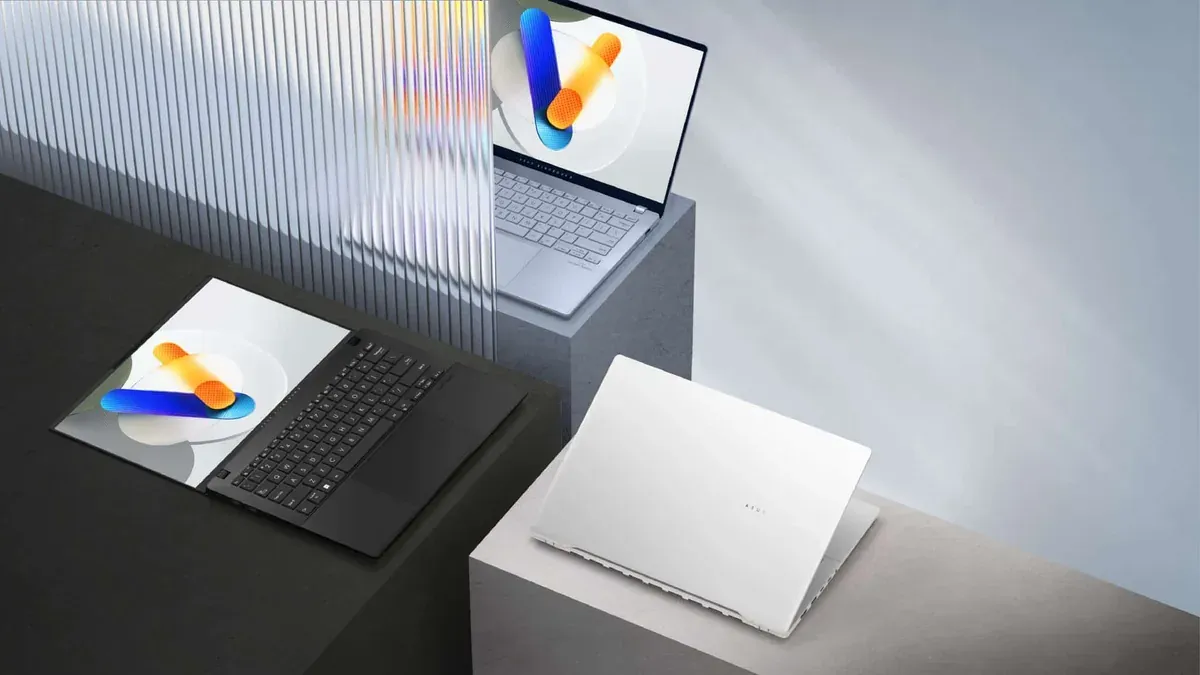
ASUS Vivobook S Series (2024) – S5406 / S5506 / S5606 / M5406 / M5506 / M5606
Mainstream thin-and-light family in 14, 15.6 and 16 inches
Pros
- 14-, 15.6- and 16-inch model options
- Intel Core Ultra or AMD Ryzen 8040-series choices
- OLED options available
- Windows 11 with Copilot key
Cons
- Specs vary widely across the six model numbers
- No discrete GPU mentioned for the family
Features
A 2024 mainstream premium thin-and-light family spanning 14-, 15.6- and 16-inch models, with Intel Core Ultra or AMD Ryzen 8040-series options and OLED options. Ships with Windows 11 and a Copilot key.
Performance
A flexible family for everyday work and study, letting buyers pick screen size and platform. Because the six model numbers differ, check the exact configuration for display type and processor.
MacBook Air 13-inch (M3)
Silent fanless everyday Mac with all-day battery
RM2,962RRP USD 719
No official MYR price — approx. converted from USD 719 at 4.1200 (BNM, 2026-11-20)
Pros
- Fanless design means silent operation
- M3 is a real powerhouse when needed
- Great battery life
- Thin, lightweight aluminium body
Cons
- That screen notch will still divide opinions
- Slow SSD performance
- Marginal upgrade over last gen
Features
Apple M3 chip with a 13.6-inch Liquid Retina display, fanless aluminium design, Wi-Fi 6E and support for up to two external displays when the lid is closed.
Performance
Handles thirty Chrome tabs, Spotify, Photoshop and messaging apps at once, and is powerful enough for smaller video editing tasks. Reviewers measured about 10 hours 24 minutes of battery life in testing, short of Apple's claim but still a full working day.
Sources
- t3.com — Fanless silent operation, 43% multi-core boost, heat under load
- reviewed.com — Everyday multitasking, 10.5-hour battery, slow SSD, marginal upgrade
- thegadgetflow.com — Two full workdays of battery, weight and build impressions
- thedisconnekt.com — 1.24kg weight, design, limited ports versus Pro
- alexreviewstech.com — 18-hour rating, 2560x1164 500-nit display, colour options
- itpro.com — 13.6in 2650x1664 panel, 60Hz refresh, M2 value argument
- youtube.com — Long-term battery and standby experience
- asus.com — Zenbook DUO dual-screen specs and RM9,999 price