


Top 5 Mesh Wi-Fi Systems for Double-Story Terrace Houses
A buying guide to the best mesh Wi-Fi systems for double-storey terrace houses in Malaysia, covering TP-Link Deco X50, Mercusys Halo H80W, TP-Link Deco 7 Pro…
| Mesh Wi-Fi | Wi-Fi Standard | Coverage | Ports | Bands | Speed | Price (RM) |
|---|---|---|---|---|---|---|
| TP-Link Deco X50 | WiFi 6 | — | — | — | — | — |
| Mercusys Halo H80W | — | — | — | — | — | — |
| TP-Link Deco 7 Pro BE63 | WiFi 7 | — | — | — | — | — |
| ASUS ZenWiFi BT10 | WiFi 7 (802.11be) | Up to 6000 sq. ft. (2pk) | Dual 10G ports | Tri-band | 18 Gbps | — |
| ASUS ZenWiFi XT9 | WiFi 6 | 5700 square feet | 2.5Gbps WAN port, Gigabit LAN ports | Tri-band | 7800Mbps | 778 |
Why double-storey terrace houses need mesh Wi-Fi in Malaysia
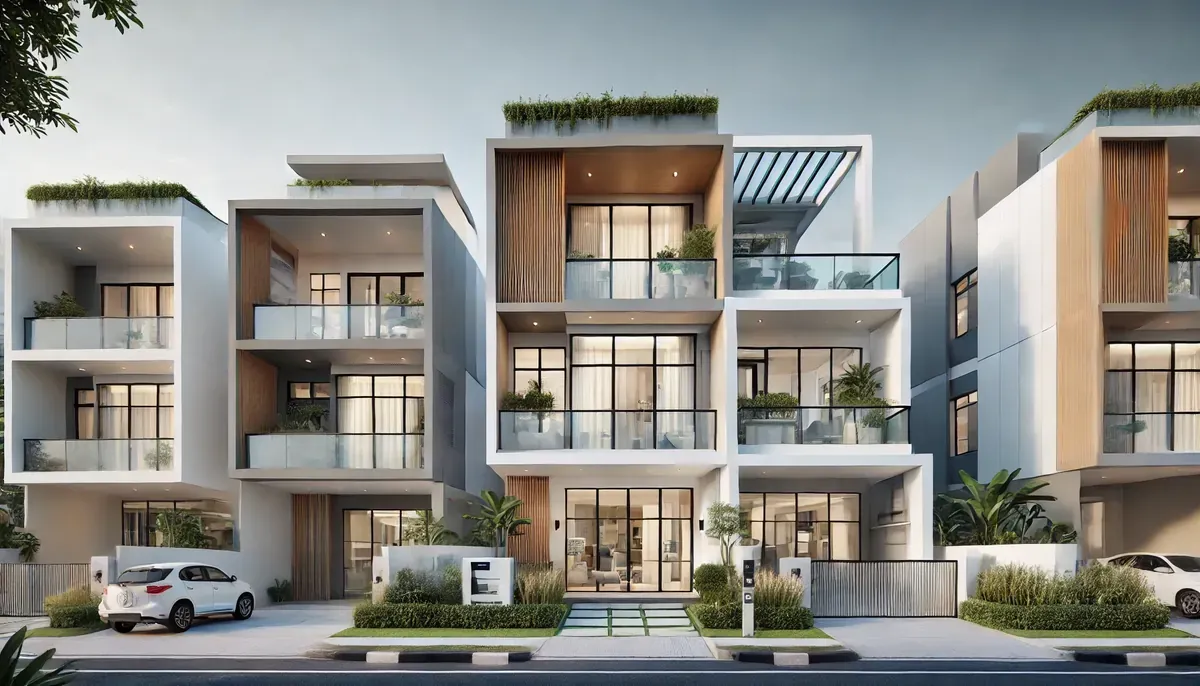
A double-storey terrace house in Malaysia usually means reinforced concrete floors, interior brick walls and a long, narrow layout. TP-Link Malaysia notes that a home with two stories or more, interior brick walls or an unusual layout benefits from a mesh Wi-Fi router. A single router placed at the front of the house often leaves the upstairs back bedrooms and the kitchen struggling.
Mesh Wi-Fi beats a single router or a basic extender because the nodes talk to each other and hand your devices over as you move between floors. A Maxis Home Fibre guide frames it as the whole-home answer to the extender question for a two-storey house. Local users back this up: one Lowyat forum member running Deco M4 units in a double-storey house said a three-pack was bought but only two units were needed to cover the whole house.
Our 5 Picks at a Glance
For most double-storey terrace homes, the TP-Link Deco X50 and Mercusys Halo H80W cover the value end, the TP-Link Deco 7 Pro BE63 sits in the middle with Wi-Fi 7, and the ASUS ZenWiFi BT10 and ASUS ZenWiFi XT9 handle the premium end. RTINGS.com called the TP-Link Deco 7 Pro BE63 the best mesh Wi-Fi system it has tested, praising fast, consistent coverage. ASUS says its own ZenWiFi BT10 was the best mesh networking system it tested in the past year, citing the fastest performance. The ASUS ZenWiFi line is marketed in Malaysia as a Wi-Fi 7 mesh option.
Coverage and node count for two floors
Plan for node placement first, because a double-storey terrace house splits coverage across two levels. A common local setup pairs a main router with a mesh access point on the second storey, exactly the ER706W plus EAP610 combination suggested in a TP-Link Malaysia community thread. TP-Link also points out that a two-storey or brick-walled home is the profile that gains most from mesh.
More nodes are not automatically better. The Lowyat user with a three-pack Deco M4 only deployed two units and still covered the whole house. Start with a two-pack for a standard terrace layout, then add a third node only if the back rooms or the upstairs corner stay weak.
Wi-Fi generation, bands and future-proofing
Wi-Fi 7 is the current step up, and it matters if you have a fast fibre plan and many devices. ASUS positions its ZenWiFi range as the next-gen Wi-Fi 7 mesh option for Malaysia, and its ZenWiFi BT10 review page claims the fastest performance among the mesh systems it tested that year. RTINGS.com rated the TP-Link Deco 7 Pro BE63 as its top mesh pick for fast, consistent coverage.
If your budget is tighter, Wi-Fi 6 mesh still handles streaming, video calls and a house full of phones. Older tri-band systems remain relevant too: Blacktubi described the TP-Link Deco M9 Plus as the fastest mesh system TP-Link sold at the time, with a tri-band Wireless AC2200 setup. Match the generation to your broadband speed rather than buying the newest badge by default.
Price tiers and what you actually pay
Malaysia's router market gives you clear price anchors. A Fix It Sukil guide lists the Archer AX23 at RM199 for an apartment or small home, the Archer AX55 at RM329 as the best balance for most homes, and the Archer AX73 at RM429 for a large home with many devices. Those are single routers, so treat them as the floor for what a mesh kit will cost.
If you would rather spread the cost, Unifi offers a Wi-Fi 7 mesh add-on at RM20/month for 24 months under its FAQ. For the five picks here, the TP-Link Deco X50, Mercusys Halo H80W, TP-Link Deco 7 Pro BE63, ASUS ZenWiFi BT10 and ASUS ZenWiFi XT9 all need a current price check, since mesh kit pricing moves with promotions and bundle deals.
Where to Buy and What to Check
Buy from authorised Malaysian sellers so you get local warranty and SIRIM-certified units. Check the box for the Wi-Fi generation, the number of nodes and whether the kit is a two-pack or three-pack before you compare prices.
Confirm your fibre plan speed first, then pick a mesh tier that matches it. Verify the return policy and whether the retailer bundles installation help, because node placement is what decides whether a double-storey terrace house actually gets full coverage.
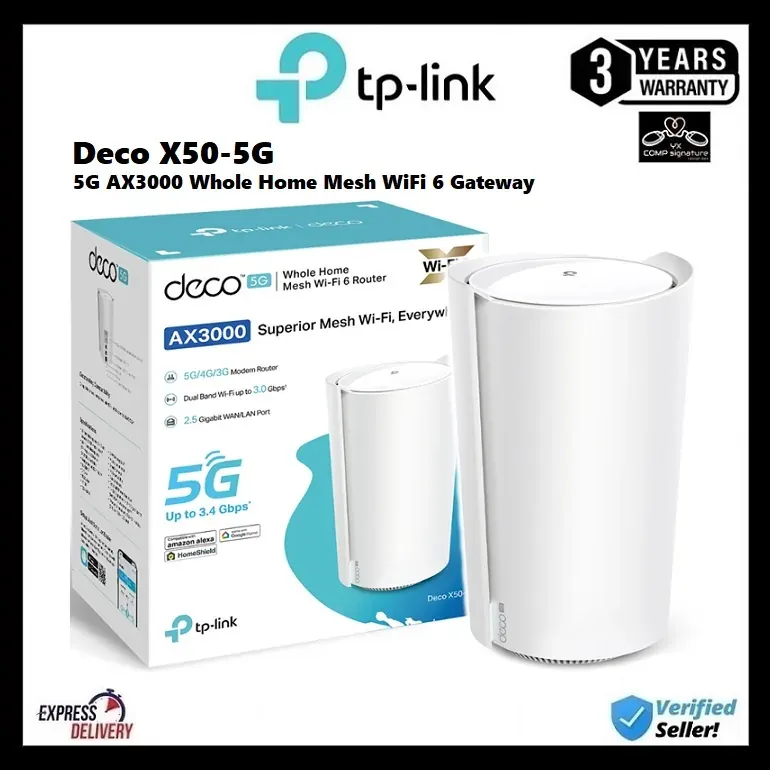
TP-Link Deco X50
Mainstream Wi-Fi 6 mesh for double-storey Malaysian homes
Pros
- Wi-Fi 6 mesh with Deco app setup and management
- Single network across floors — no switching SSIDs
- EasyMesh and HomeShield support in the Deco line
Cons
- Not Wi-Fi 7 — no 6GHz band
- Speeds drop on wireless backhaul between nodes
Features
A Deco-series whole-home mesh node that links to your modem as the main hub while additional nodes rebroadcast the signal across the home on one SSID. Managed through the Deco app with parental controls and network settings.
Performance
Built for homes that are 3,000 sq. ft., two storeys or more, with interior brick walls or an unusual layout, where a single router leaves dead zones. Expect stable coverage upstairs and downstairs, with throughput limited by the wireless backhaul between nodes.
Mercusys Halo H80W
Budget whole-home mesh for wide coverage
Pros
- Mesh nodes on a single network for whole-home coverage
- Cheaper entry into mesh than flagship tri-band kits
- Suits multi-storey layouts with weak single-router coverage
Cons
- Entry-tier mesh — lower throughput than premium kits
- Fewer advanced features than TP-Link Deco or ASUS ZenWiFi
Features
A multi-node mesh kit where one unit connects to the modem and the remaining nodes rebroadcast the signal, sharing one SSID and password across the whole home.
Performance
Aimed at homes with weak or incomplete WiFi coverage that want an uncomplicated setup. Works best where nodes have a reasonably clear line of sight; thick concrete walls and metal objects degrade the link between nodes.
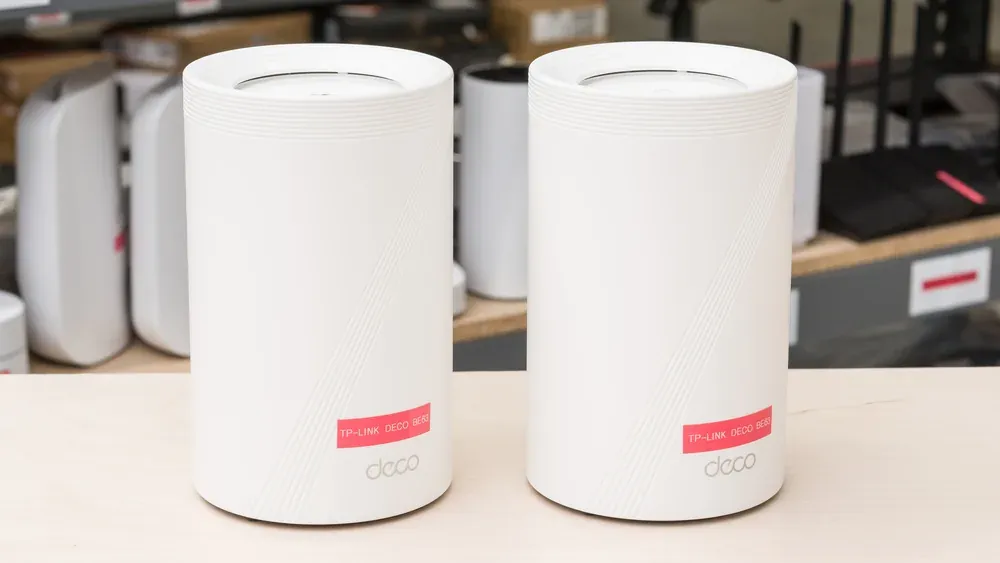
TP-Link Deco 7 Pro BE63
Best-tested mesh system for fast, consistent coverage
Pros
- Named the best mesh Wi-Fi system tested by RTINGS
- Wi-Fi 7 with modern band support
- Great choice for fast, consistent coverage across a home
Cons
- Premium pricing versus Wi-Fi 6 mesh kits
- Benefits need Wi-Fi 7 client devices to show
Features
A Wi-Fi 7 Deco mesh system positioned as TP-Link's top whole-home kit, with multi-node coverage managed from the Deco app alongside HomeShield and EasyMesh features.
Performance
RTINGS rates it the best mesh Wi-Fi system they've tested, making it a great choice if you want fast, consistent coverage across a home — at a higher price than Wi-Fi 6 alternatives.
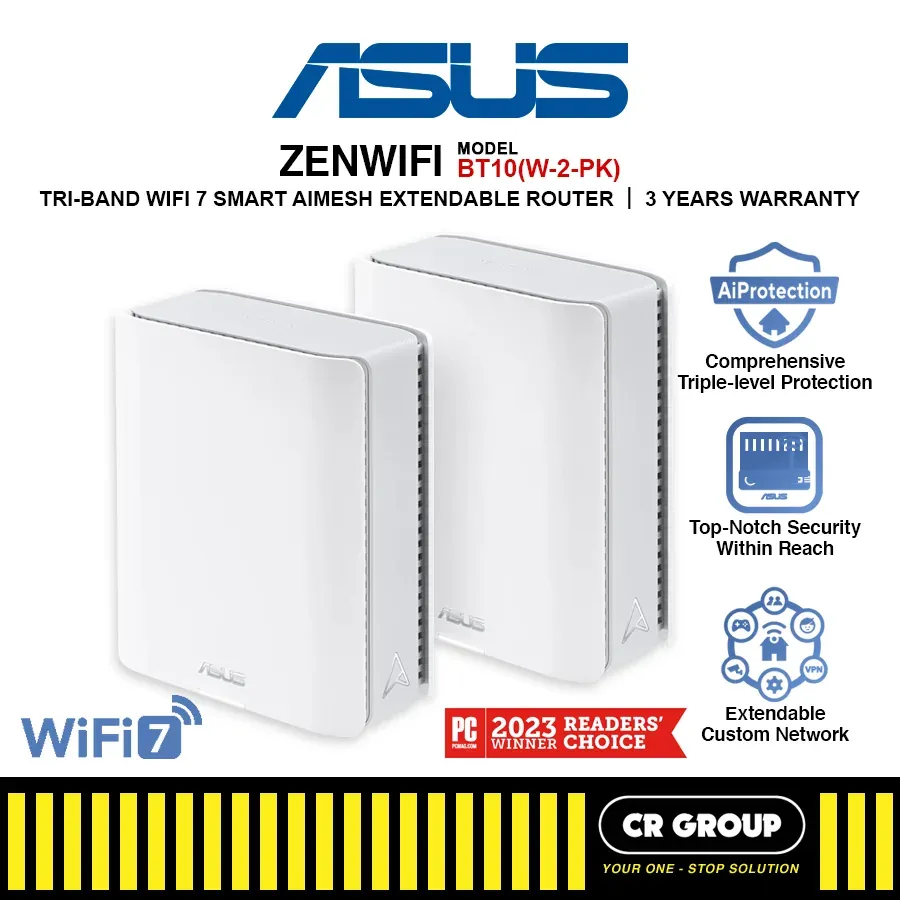
ASUS ZenWiFi BT10
Fastest mesh system ASUS has put through review
Pros
- Best mesh networking system tested in the past year per ASUS review
- Offered the fastest performance in that testing
- AiMesh lets you add compatible ASUS routers to extend the network
Cons
- Flagship pricing
- Best speeds need Wi-Fi 7 clients and multi-gig backhaul
Features
Part of the ASUS ZenWiFi Wi-Fi 7 mesh series, which supports multi-link operation across 2.4GHz, 5GHz and 6GHz, 320MHz channels and 4K-QAM, with up to two 10G Ethernet ports on select models. Setup and management run through the ASUS Router app with AiProtection security and parental controls.
Performance
ASUS states the BT10 was the best mesh networking system it tested in the past year, offering the fastest performance, with ZenWiFi nodes auto-synchronising so you only configure one unit.
ASUS ZenWiFi XT9
Tri-band ZenWiFi mesh with whole-home coverage
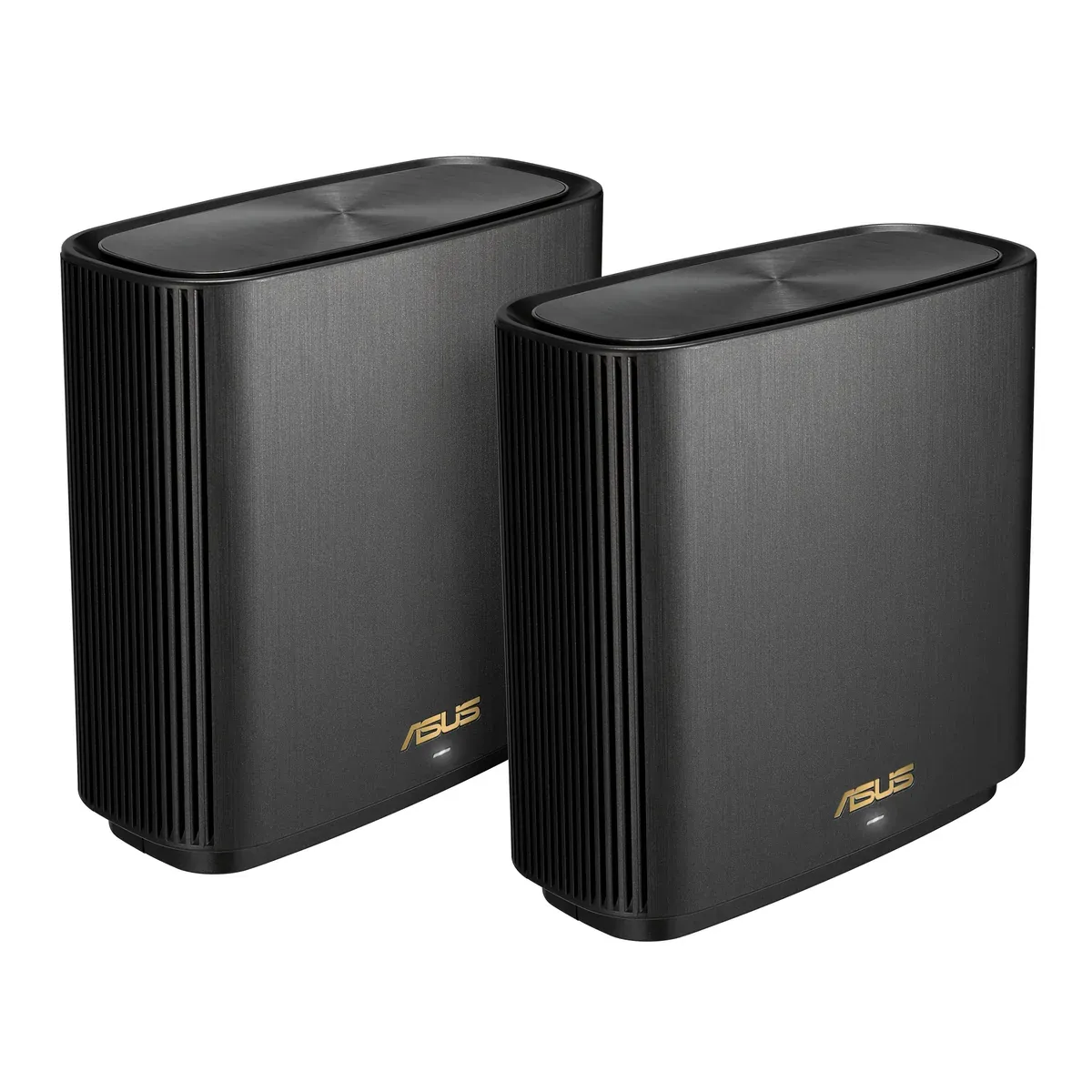
RM778RRP USD 189.99
No official MYR price — approx. converted from USD 189.99 at 4.0960 (BNM, 2026-10-02)
Pros
- Coverage up to 5700 sq. ft.
- Whole-home coverage with always-on security
- Plug-and-extend dead-zone-free setup
Cons
- Wi-Fi 6, not Wi-Fi 7
- Coverage claims assume an open layout
Features
A tri-band ZenWiFi mesh system in the ASUS line-up, set up in three steps via the ASUS Router app with node auto-synchronisation, AiProtection security and parental controls.
Performance
ASUS rates the XT9 for whole-home coverage up to 5700 sq. ft. with dead-zone-free extension. Keep nodes within 10–15 metres of each other and away from concrete walls and large metal objects for best cross-floor results.
Sources
- tp-link.com — Two-storey and brick-wall homes benefit from mesh
- rtings.com — Deco 7 Pro BE63 rated best mesh tested
- asus.com — ASUS ZenWiFi Wi-Fi 7 positioning in Malaysia
- asus.com — ZenWiFi BT10 fastest performance claim
- maxis.com.my — Mesh vs extender for two-storey house
- forum.lowyat.net — Deco M4 two-node coverage in double-storey home
- fixitsukil.com — Router price anchors RM199, RM329, RM429
- unifi.com.my — Mesh add-on at RM20/month for 24 months